

Nikola Tesla Institute
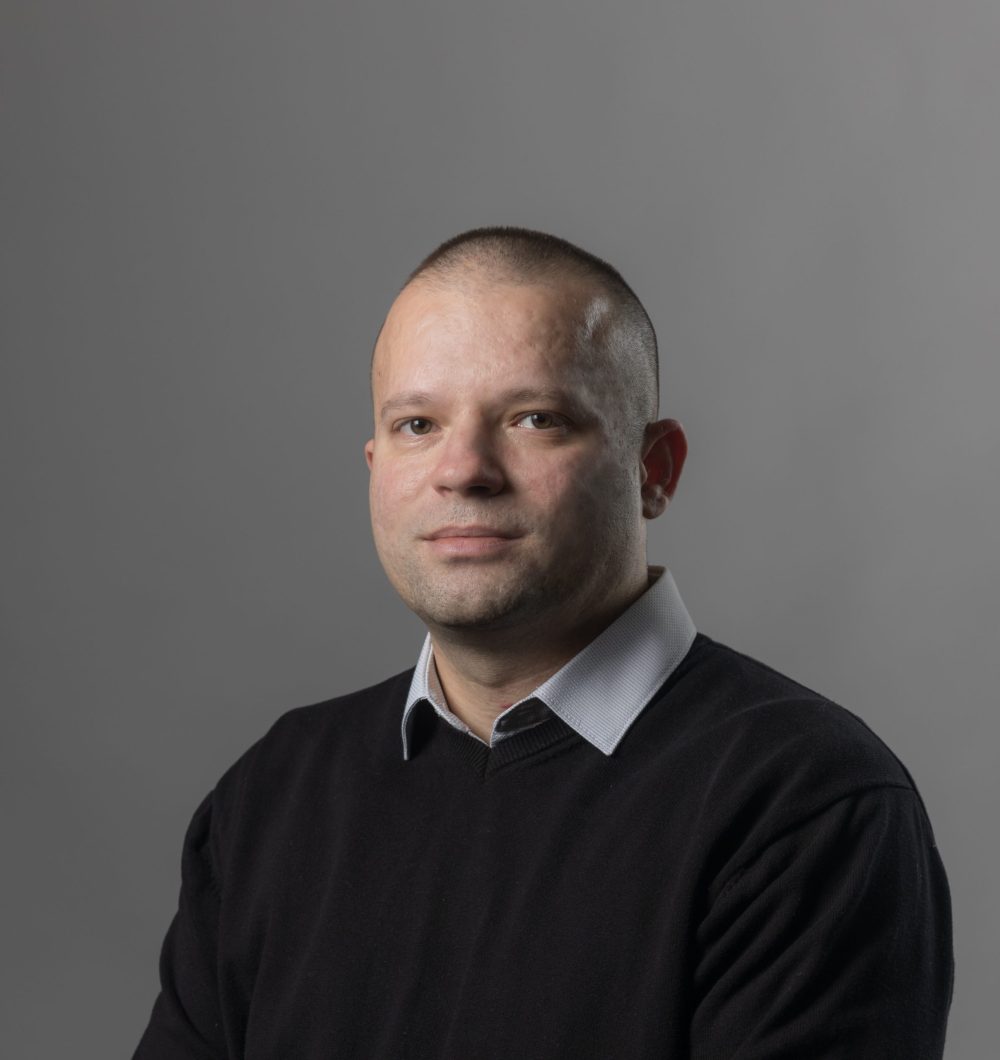
Dejan Kolarski
Tesla’Ssorb and TeslaCleans: A Synergistic Approach to Silver Corrosion Mitigation in Power Transformers
ABSTRACT
For more than two decades, corrosion of metals caused by sulfur contamination has been recognized as a significant issue in liquid filled power transformers (PT). Initially, the problem was mainly associated with copper corrosion, which the power industry has since successfully managed and mitigated. However, in the past decade, new concerns have emerged due to reported transformer failures and inspection findings revealing corrosion of silver components inside PT. This paper focuses on better understanding the phenomenon of silver corrosion, particularly in relation to testing methods and mitigation strategies. Resent research has revealed that significant number of synthetic ester insulating liquids have also shown corrosiveness on silver according the ASTM D1275-15 silver strip corrosion test, due to presence of elemental sulphur (S8) in sub ppm concentrations (0.3 to 0.8 ppm), while dibenzyl disulfide (DBDS) was not detected in the oils. For accurate silver corrosion risk assessment, it is essential to combine sulphur quantification techniques with performance silver strip corrosion tests. Gas chromatography equipped with a micro electron capture detector (µECD) proved to be an effective analytical method for quantifying elemental sulphur in insulating liquids. The technique offers high sensitivity, with detection and quantification limits of 0.05 ppm for synthetic esters and 0.07 ppm for mineral oils, making it suitable for quantifying even trace amounts of elemental sulphur in insulating liquids. Another important finding is that commonly used metal passivators, such as tolyltriazole and benzotriazole, are ineffective in protecting silver surfaces from corrosion. Consequently, remedial actions are often limited to fluid replacement or treatment to remove corrosive compounds from the liquid. Traditional re-refining and recycling methods were found to be inefficient in removal elemental sulphur from synthetic esters. Moreover, these methods struggle to meet modern European Union “Green Deal” directives aimed at reducing carbon footprints. In cases where silver-plated components have already been affected, inspection and maintenance are recommended. Corroded silver contacts should either be replaced or cleaned. This paper introduces Tesla’Ssorb and TeslaCleanS as a new integrated technological solution. Tesla’Ssorb presents a new tailor-made adsorbent, designed to remove elemental sulphur from synthetic ester fluids, without requiring fluid replacement. Using a specialized mobile rig that connects directly to the transformer, the oil treatment with Tesla’Ssorb can be performed while the transformer remains energized and in operation. This approach minimizes downtime and reduces waste. In addition to eliminating corrosive sulphur, the treatment improves key fluid properties such as dielectric dissipation factor, acidity, breakdown voltage. To complement oil treatment, TeslaCleanS provides a non-destructive chemical solution, specifically formulated to remove silver sulfide deposits from on-load tap changer (OLTC) components. Unlike abrasive mechanical cleaning, this method preserves the integrity of silver-plated surfaces through simply wipe cleaning process, restoring the components to their original condition and ensuring long-term reliability. Together, Tesla’Ssorb and TeslaCleanS technologies provide a comprehensive, sustainable and highly efficient approach for permanently eliminating sulphur induced silver corrosion, while ensuring the long-term reliability of power transformers.
Keywords: Silver corrosion, elemental sulphur, synthetic ester, silver-sulphide, OLTC, treatment, reclamation
Biography of the presenter
Dejan Kolarski, M.Sc. in Chemical Engineering, has been employed at the Nikola Tesla Electrical Engineering Institute, JSC Belgrade, since 2018. He works as a research associate in a specialized laboratory for testing insulating oils and paper, accredited in accordance with IEC 17025, where he is involved in analytical testing, quality control, and method development. In November 2019, he enrolled in PhD studies at the University of Belgrade, Faculty of Technology and Metallurgy, Department of Chemical Engineering. His doctoral research focuses on the development and optimization of processes for the desulfurization of mineral insulating oils, with emphasis on efficiency, stability, and industrial applicability of the developed process. He is the author and co-author of several published scientific papers and has participated in multiple research projects related to insulating oil treatment. In 2023, he filed a patent application titled “ Desulfurization Process” (No. P-2023/0532). He is also the inventor of an internationally registered patent, GB2631809B, entitled “Desulphurisation Process.