

Nikola Tesla Institute
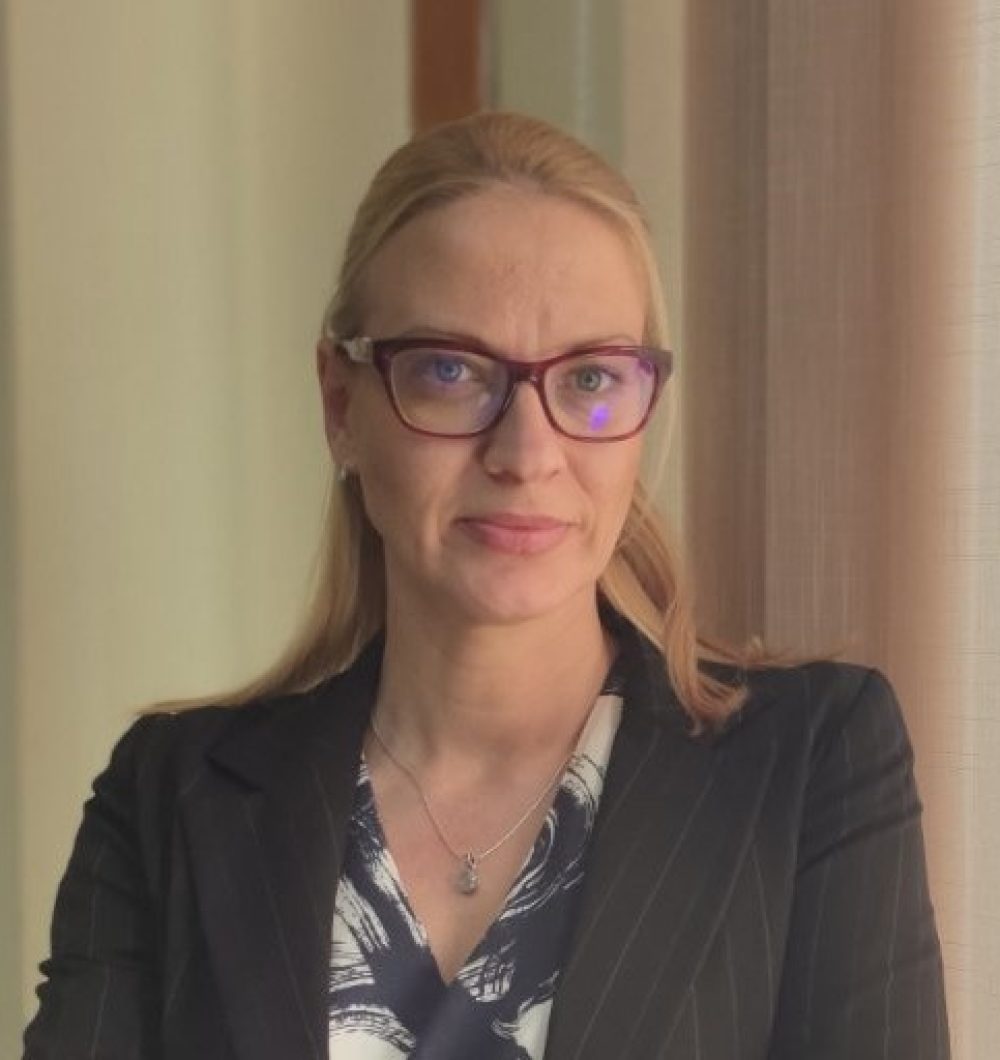
Dr. Jelena Janković
Corrosive Sulphur - Recurring phenomenon impacting power transformer reliability / Tesla’Ssorb and TeslaCleans: A Synergistic Approach to Silver Corrosion Mitigation in Power Transformers
Abstract: Corrosive Sulphur - Recurring phenomenon impacting power transformer reliability
Metals corrosion in power transformers and its relation to sulphur contamination was recognized as a problem affecting liquid-filled power transformers for more than two decades. At the beginning it was recognized as copper corrosion which was dealt within the power sector industry and as of today can be considered as well mitigated. Over the last decade, cases of reported failures and evidences of silver corrosion upon inspection of power transformers were also reported. Phenomenon of silver corrosion has drawn much attention in recent five years, owing to the occurrence of corrosive sulphur in modern insulating liquids based on synthetic esters which does not contain sulphur. Again, for third time, CIGRE launched investigation related to corrosive sulphur within SC A2.02 task force in April 2024 to work for one year and observe the extent of the problem and recommend whether more work is needed on the subject. In October 2025 new CIGRE Working group JWG D1/A2 84 was established with the task to study and provide recommendations how to solve silver corrosion problem which is affecting on load tap changers and bushings, although in previous decades two CIGRE WGs dealt with problem of copper corrosion risk assessment and long-term mitigation. CIGRE JWG D1/A2 84 will work for another three years to elaborate on silver corrosion testing, risk assessment and mitigation of ester based insulating liquids, as well as mineral insulating oils, since new reports of silver corrosion in mineral oils and related failures have been reported, including recommendations for mitigation techniques and remedial solutions. Old fashioned corrosion in mineral oils is related in majority of the cases to the presence of disulphides, including DBDS. Phenomenon of insulating liquids contamination with elemental sulphur is in majority related to ester based insulating liquids. Silver sulphide deposition in synthetic ester was found to be governed by low activation energy and faster reaction rate than in mineral oils, as determined in kinetic study based on laboratory experiments. Obviously, the common understanding of the phenomenon, sources of corrosive sulphur and contamination routes including materials compatibility were in the last decades not mature and application solutions in the industry were undermined in standard requirements and to some extent failed to provide best practices. New CIGRE JWG is expected to cross this gap and provide recommendations and guidelines for future standards. This paper attempts to provide better understanding of the phenomenon and sources of reactive sulphur species and influential factors to define risk assessment guidelines driven from the corrosion reaction rates. On the other side, this paper provides innovative sustainable solutions for mitigation of corrosive ester based insulating liquids with positive environmental impact, with the goal to provide full remedial solutions for complete removal of corrosion and restoration of power transformer condition.
Keywords: corrosive sulphur, silver, copper, elemental sulphur, power transformer, On load tap changer
ABSTRACT: Tesla’Ssorb and TeslaCleans: A Synergistic Approach to Silver Corrosion Mitigation in Power Transformers
For more than two decades, corrosion of metals caused by sulfur contamination has been recognized as a significant issue in liquid filled power transformers (PT). Initially, the problem was mainly associated with copper corrosion, which the power industry has since successfully managed and mitigated. However, in the past decade, new concerns have emerged due to reported transformer failures and inspection findings revealing corrosion of silver components inside PT. This paper focuses on better understanding the phenomenon of silver corrosion, particularly in relation to testing methods and mitigation strategies. Resent research has revealed that significant number of synthetic ester insulating liquids have also shown corrosiveness on silver according the ASTM D1275-15 silver strip corrosion test, due to presence of elemental sulphur (S8) in sub ppm concentrations (0.3 to 0.8 ppm), while dibenzyl disulfide (DBDS) was not detected in the oils. For accurate silver corrosion risk assessment, it is essential to combine sulphur quantification techniques with performance silver strip corrosion tests. Gas chromatography equipped with a micro electron capture detector (µECD) proved to be an effective analytical method for quantifying elemental sulphur in insulating liquids. The technique offers high sensitivity, with detection and quantification limits of 0.05 ppm for synthetic esters and 0.07 ppm for mineral oils, making it suitable for quantifying even trace amounts of elemental sulphur in insulating liquids. Another important finding is that commonly used metal passivators, such as tolyltriazole and benzotriazole, are ineffective in protecting silver surfaces from corrosion. Consequently, remedial actions are often limited to fluid replacement or treatment to remove corrosive compounds from the liquid. Traditional re-refining and recycling methods were found to be inefficient in removal elemental sulphur from synthetic esters. Moreover, these methods struggle to meet modern European Union “Green Deal” directives aimed at reducing carbon footprints. In cases where silver-plated components have already been affected, inspection and maintenance are recommended. Corroded silver contacts should either be replaced or cleaned. This paper introduces Tesla’Ssorb and TeslaCleanS as a new integrated technological solution. Tesla’Ssorb presents a new tailor-made adsorbent, designed to remove elemental sulphur from synthetic ester fluids, without requiring fluid replacement. Using a specialized mobile rig that connects directly to the transformer, the oil treatment with Tesla’Ssorb can be performed while the transformer remains energized and in operation. This approach minimizes downtime and reduces waste. In addition to eliminating corrosive sulphur, the treatment improves key fluid properties such as dielectric dissipation factor, acidity, breakdown voltage. To complement oil treatment, TeslaCleanS provides a non-destructive chemical solution, specifically formulated to remove silver sulfide deposits from on-load tap changer (OLTC) components. Unlike abrasive mechanical cleaning, this method preserves the integrity of silver-plated surfaces through simply wipe cleaning process, restoring the components to their original condition and ensuring long-term reliability. Together, Tesla’Ssorb and TeslaCleanS technologies provide a comprehensive, sustainable and highly efficient approach for permanently eliminating sulphur induced silver corrosion, while ensuring the long-term reliability of power transformers.
Keywords: Silver corrosion, elemental sulphur, synthetic ester, silver-sulphide, OLTC, treatment, reclamation
Biography of the presenter
Jelena Jankovic, PhD in Chemical Engineering, Head of specialized laboratory for insulating oil and paper testing accredited according to ISO 17025. Her main fields of work and expertise are insulating oil and paper analysis, power transformers condition and risk assessment and research activities related to oil re-refining, removal of corrosive sulfur compounds and ageing products from the insulating liquids. She published more than 50 papers in international and domestic journals and conferences. She is the co-author of National registered patent 2019, for removal of sulphur compounds corrosive to silver from mineral transformer oils. Jelena Jankovic is a member of IEC TC 10 MT 43 for Revision of IEC 60666 – Detection and determination of specified additives in mineral insulating oils and CIGRE SC A2.02 TF on sliver corrosion. She is a member of Serbian National Committee CIGRE SC A2 – Transformers and a member of Technical Committee KS N010 – Fluids for electrotechnical applications of Institute for Standardization of Serbia.