

Nikola Tesla Institute
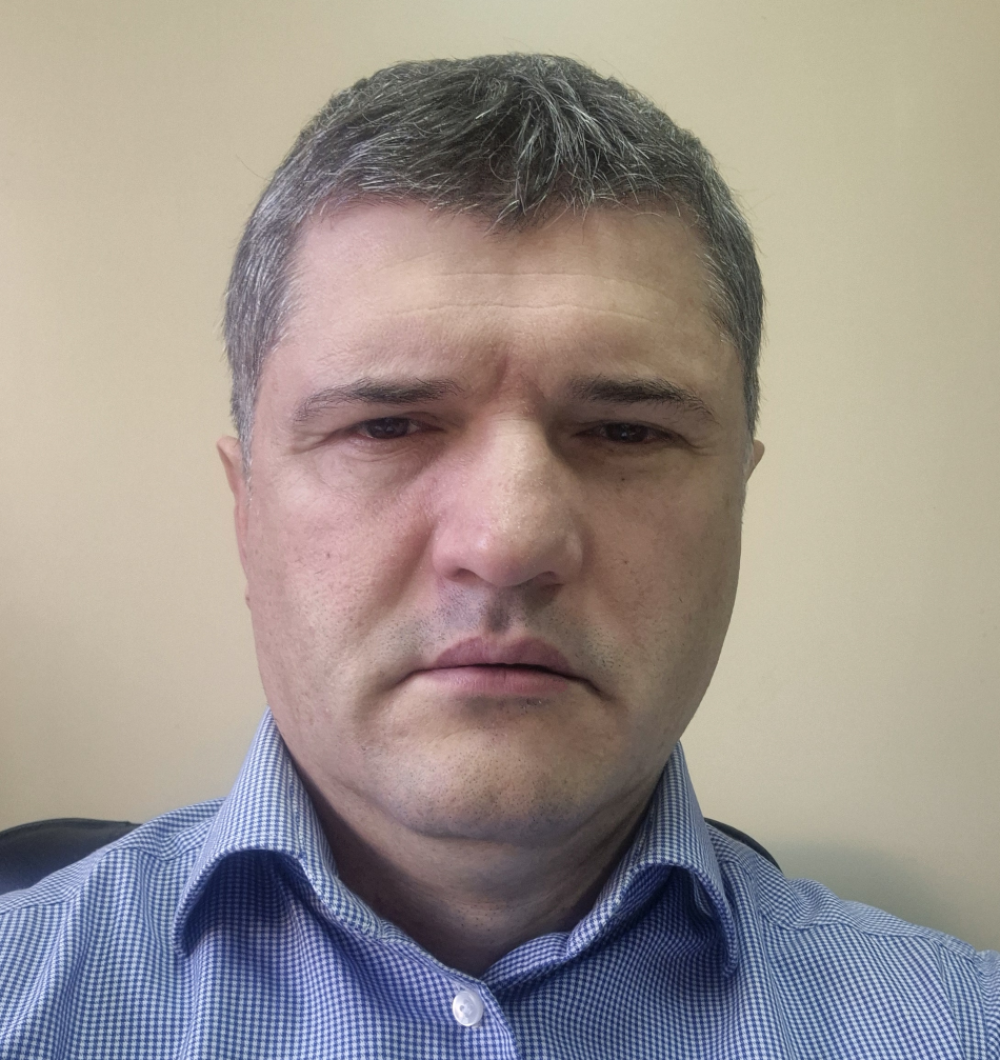
Mladen Ostojić
The importance of modular uninterrupted power supply systems in modern power systems
ABSTRACT
A way to promote and accelerate the adoption of electric vehicles (EVs) among the general public is by highlighting the amenities they offer. Wireless power transfer is an attractive concept that, when applied to EV charging, enables a seamless charging process while reducing the required battery size, maintenance costs, and equipment wear. However, wireless charging technology is complex, and several challenges hinder its widespread adoption. This presentation aims to provide an overview of wireless charging technology for EVs, discussing key challenges such as inductive link compensation, converter topologies, control strategies, bidirectional power flow, and converter synchronization. Conventional solutions will be briefly analyzed, with the main focus on state-of-the-art approaches, particularly in the areas of highly efficient and robust inductive link compensation, single-stage chargers, and compact three-phase chargers designed for high power transfer densities. Implementation guidelines, prototypes, and experimental data will be presented, covering various prototypes and a wide range of power levels, from 3.3 kW to 40 kW, with efficiencies reaching up to 96.8%.
Keywords: electric vehicles, wireless charging
Biography of the presenter
Mladen Ostojić Senior Embedded Software & Control Systems Engineer Education University degree (VII/1) Faculty of Electrical Engineering, University of Belgrade Profile description Design and development of integrated hardware software systems (C/C++, low level, assembly, RTOS) for advanced real time applications on microcontroller-based platforms. Implementation and design of digital control systems and control algorithms on DSP platforms. Power electronics control and high-voltage systems control. Generator control, synchronization, and protection. UPS systems and static switches. PLC and industrial automation. HMI/SCADA systems and operator interfaces. Functional safety (automotive and industrial systems). Software architecture and V&V (Verification & Validation) for complex engineering solutions based on MCUs. Control algorithm design for electrostatic precipitator (ESP) systems (three-phase, single phase and middle frequency regulation and control). Transformer thermal modeling and hot-spot temperature analysis. Expertise of high voltage transformer rectifier unit. Design and development of safety critical embedded systems. Technical interests Deployment and optimization of neural networks on microcontrollers. Industrial IoT (IIoT) architectures for connected power and automation systems. Employment Electrical Institute “Nikola Tesla”, Belgrade Junior Researcher 2008 Principal Technical Associate 2024-present Languages Serbian – Native proficiency English.