

Politecnico di Torino, Italy
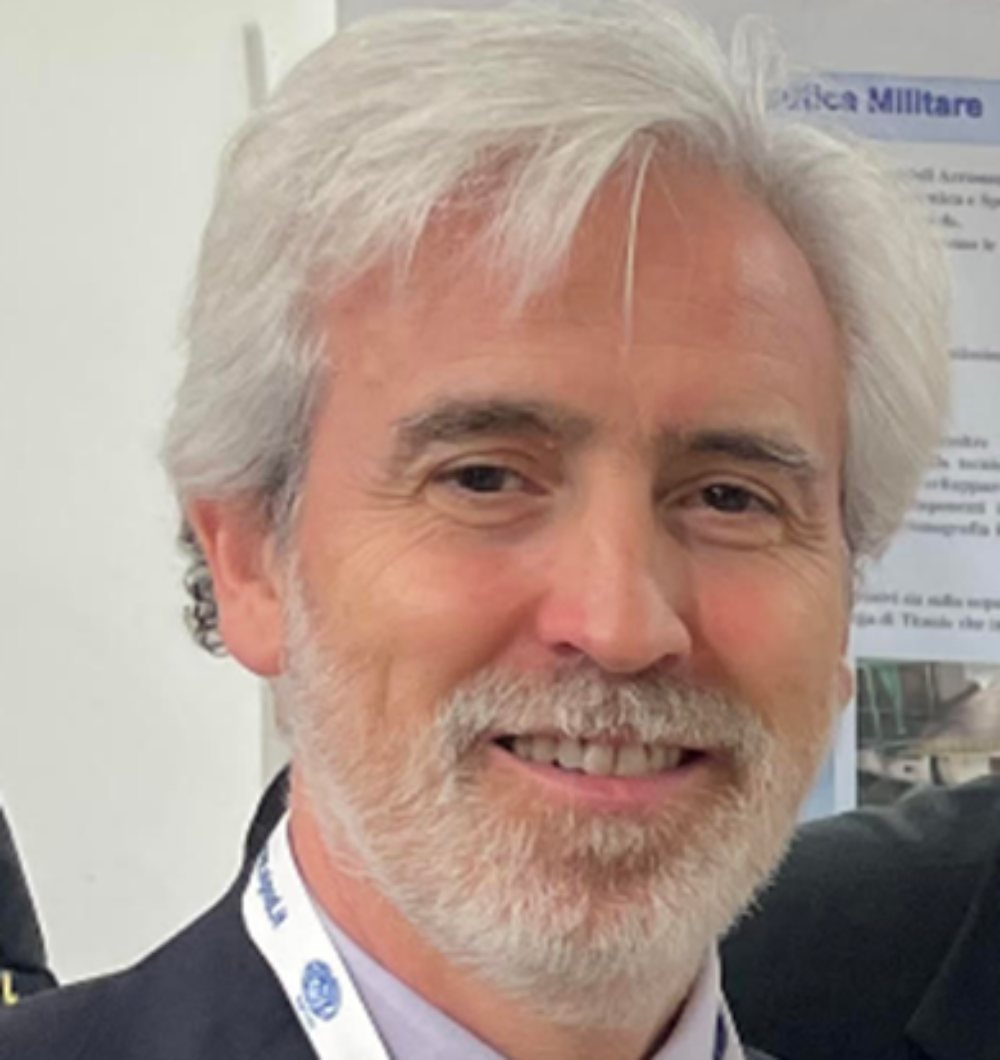
Prof. dr. Aldo Canova
Electromagnetic Impact of Inductive Power Transfer for Car Recharging
Abstract
This work presents an in-depth analysis of Wireless (Inductive) Power Transfer (IPT) systems for automotive applications, with particular focus on electromagnetic exposure assessment and compliance with international safety standards. The study addresses both stationary (static) and dynamic charging configurations operating at the standardized frequency of 85 kHz, as defined by SAE J2954 and IEC 61980, which currently represent the main regulatory references for interoperable wireless charging of electric vehicles. After introducing the fundamental principles of inductive coupling and resonant compensation networks, the paper describes the equivalent circuit modeling of magnetically coupled coils and analyzes current and voltage waveforms under nominal operating conditions as well as in cases of lateral and longitudinal misalignment. Special attention is devoted to the impact of misalignment on power transfer efficiency, leakage flux, and system stability. In dynamic charging scenarios, where vehicles move over embedded transmitters integrated into the road infrastructure, the magnetic field exhibits a pulsed (burst-type) behavior due to sequential coil activation. Nevertheless, spectral analysis demonstrates that exposure evaluation can be effectively conducted using time-harmonic formulations, since the dominant frequency component remains clearly identifiable and higher harmonics are limited in amplitude. The exposure assessment framework is based on ICNIRP 2010 guidelines, the EU Recommendation 1999/519/EC, Directive 2013/35/EU, and specific standards concerning workers with active implantable medical devices. The Weighted Peak Method (WPM) is discussed as an appropriate technique for evaluating non-sinusoidal waveforms and transient operating conditions. Three-dimensional numerical simulations are carried out to investigate different exposure scenarios, considering coil alignment and misalignment, vehicle chassis materials (aluminum, steel, and carbon fiber), shielding configurations, and occupant posture. The influence of structural components on magnetic flux distribution and induced electric fields within the human body is quantified through dosimetric analysis. Results indicate that the calculated internal electric fields remain below the basic restrictions for both occupational and general public exposure. An experimental dynamic charging lane is also described, featuring multiple embedded transmitters, kilowatt-level power transfer capability, and efficiencies exceeding 85% under motion. Finally, magnetic structure optimization strategies, including ferrite-based flux guidance and evolutionary design algorithms, are presented to minimize stray fields, enhance coupling performance, and reduce environmental impact. Overall, the study confirms that properly engineered IPT systems can ensure safe, efficient, and sustainable operation in advanced electric mobility applications.
Keywords: Inductive Power Transfer (IPT), Dynamic Wireless Charging, Electromagnetic Exposure Assessment, Standard Safety Guidelines, Weighted Peak Method (WPM), Magnetic Field Shielding
Biography of the presenter
1992: Degree and 1996: PhD in electrical engineering at the Politecnico of Torino (Italy)
Oct. 1992–March 1993: Researcher at “Istituto Elettrotecnico Nazionale Galileo Ferraris” (Torino, Italy).
1995: Researcher at Napier University (Edinburgh, Scotland).
1995 –2003: Researcher at Dipartimento di Ingegneria Elettrica of the Politecnico di Torino (Italy)
2004 to 2017: Associate Professor and since 2017 Full Professor in Electrical Engineering Science.
Since 2004 – Member of Comitato Elettrotecnico Nazionale – Tech. Committee CT106 (Methods for the assessment of electric, magnetic and electromagnetic fields associated with human exposure)
2015 to 2019 President of Scientific Committee of the Italian Non-Destructive Testing Association (AIPnD), then 2019-2022 General Secretary and since 2023 Vice President.
2007-2012 Founder-President of the Spin Off of Politecnico di Torino: AMC Instruments Ltd. operates in non destructuve testing.
2018-2024 Chairman on Electrical Engineering Course and now ViceCoordinator of Electrical and Energetical school at the Politecnico of Torino.
Since may 2022 is members of the International Advisory Board of the Elektrotehnički institut “Nikola Tesla” of Beograd.
He has authored/coauthored about 180 scientific publications and 8 patents. He is involved in research activities related to numerical computation of electromagnetic fields in power devices, magnetic shielding, human exposure to electromagnetic fields, energy system modelling and optimisation and non destructive testing.