

University of Southampton
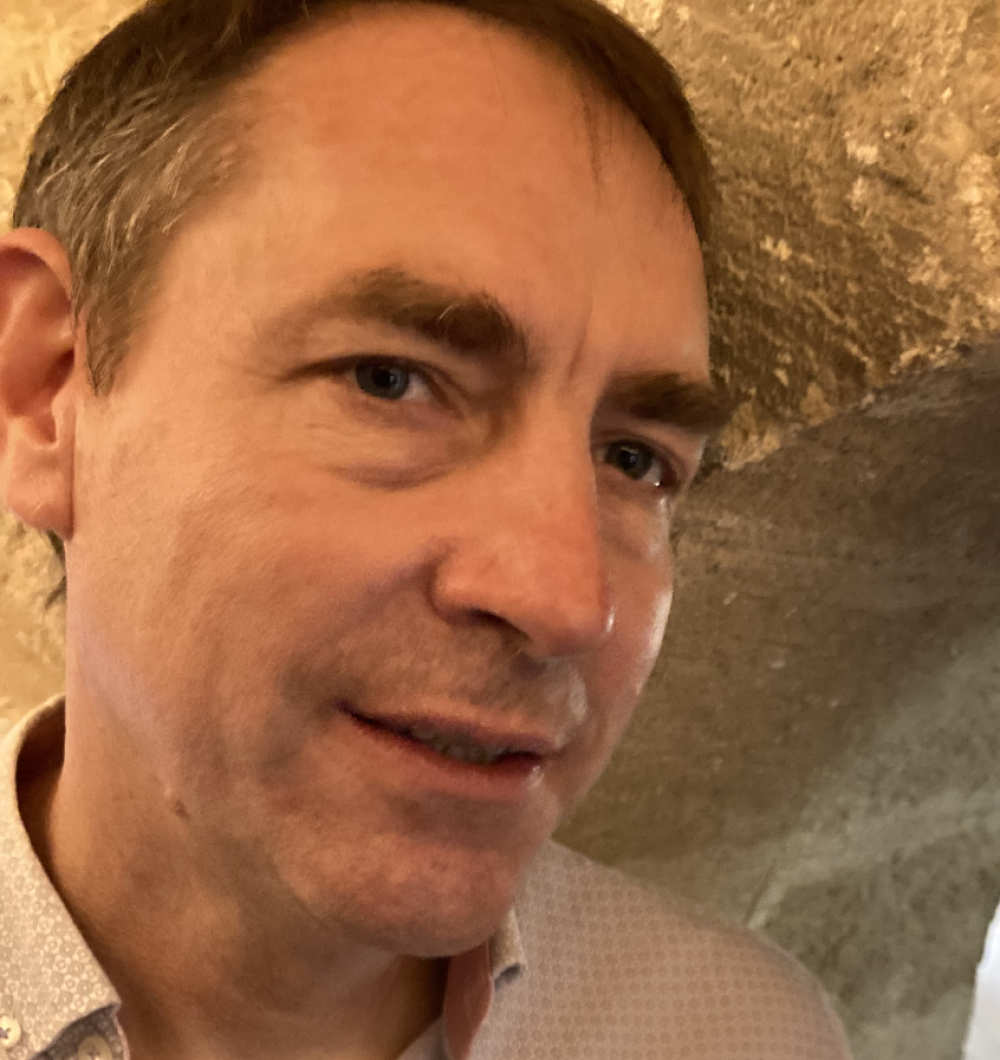
Prof. dr Richard Brown
Alternative analytical approaches applied to transformer materials
ABSTRACT
Our transformer-related research is carried within an interdisciplinary team comprised of organic and analytical chemists, and engineers from the Tony Davies High Voltage Laboratory (Southampton) and National Grid (UK). From my own simplified perspective – as a synthetic organic chemist – high voltage transformers can be considered as large chemical reactors made of iron, containing mainly copper, silver, cellulose and a dielectric fluid. The latter is usually a complex mixture of organic compounds such as mineral oil, or with increasing frequently, an ester-based material. Some organic compounds such as metal corrosion inhibitors and antioxidants are typically present, and there is the potential to find sulfur species often associated with corrosion of conductor surfaces. This heterogeneous reaction mixture, subjected to some rather unique reaction conditions and prolonged reaction times, creates interesting problems for chemists to study. In this context, our scientific goal is to improve understanding of the chemical processes taking place inside transformers through application of available analytical tools alongside laboratory-based aging and standard tests. To support our studies, when needed, we also develop chemical derivatisation strategies to enhance sensitivity and/or facilitate analyses and characterisation of compounds present. Some of the approaches and analytical methods we use to monitor species present in transformer fluids will be discussed. For example, a chemical derivatisation method coupled with analysis using supercritical fluid – mass spectrometry (SFC-MS) enables specific detection and quantification of elemental sulfur in mineral oil with high sensitivity.1 Advantages of SFC-MS include its suitability to separate materials with a range of physical properties under mild conditions while providing valuable information on elemental composition. Synthetic and natural ester-based transformer fluids are particularly amenable to analysis using SFC-MS, allowing identification of composition – including polyol core structure, fatty acids etc. – and the presence of additives such as antioxidants or impurities. We use SFC-MS to monitor ester based fluids subjected to accelerated laboratory aging conditions, observing oxidised and cleavage products arising from degradation of the fluid.2 Current work includes application of 2-dimensional chromatographic techniques (e.g. GCxGC-MS) to identify specific degradation products to confirm oil decomposition mechanisms and potential markers to inform on oil condition. Other work related to corrosive sulfur includes the rational development of a material for selective removal of elemental sulfur from transformer fluid down to very low levels. Removal of elemental sulfur using our synthetically modified polymer is demonstrated to be effective using a laboratory recirculating system validating the concept.3 In terms of copper corrosion, benzimidazole-based passivators can be tracked in transformer oil and on copper surfaces to assist in the selection of appropriate concentrations to mitigate the presence of corrosive sulfur.4 Our ongoing activities seek to develop and apply analytical approaches that bolster understanding of transformer chemistry, and give greater confidence in approaches used in condition monitoring and mitigation strategies. 1. S. B. Garcia, J. Herniman, P. Birkin, J. Pilgrim, P. Lewin, G. Wilson, G. J. Langley and R. C. D. Brown, Analyst, 2020, 145, 4782-4786. 2. P. Thiruvengetam, G. J. Langley, J. M. Herniman, I. L. Hosier, T. Andritsch, P. L. Lewin, G. Wilson and R. C. D. Brown, 2024 IEEE 5th International Conference on Dielectrics (ICD), 2024, 1-4. doi:10.1109/ICD59037.2024.10613221. 3. S. B. Garcia, J. Herniman, P. Birkin, J. Pilgrim, P. Lewin, G. Wilson, G. J. Langley and R. C. D. Brown, Unpublished Results. 4. M. Facciotti, P. S. Amaro, R. C. D. Brown, P. L. Lewin, J. A. Pilgrim, G. Wilson, P. N. Jarman and I. W. Fletcher, Corros. Sci., 2015, 98, 450-456.
Keywords: power transformers, dielectric fluids, aging, SFC-MS, corrosive sulfur, ester insulation fluids, analytical chemistry
Biography of the presenter
Richard Brown graduated with a B.Sc. in Chemistry from the University of Southampton in 1990. He stayed on for postgraduate research under the guidance of Professor Kocienski F.R.S., obtaining a Ph.D. in 1994 – using furans as building blocks in synthesis. He moved to the University of California Berkeley in 1994 to take up a NATO postdoctoral fellowship in Professor Clayton Heathcock’s research group working on alkaloid total synthesis. After returning to the UK in 1996, he spent six-months at Pfizer Central Research in the combinatorial technologies lab before taking up a Royal Society University Research Fellowship at the University of Southampton. He was promoted to Professor in 2010. His research interests encompass different aspects of organic chemistry including synthesis and organic electrosynthesis in flow reactors. During the last decade or so, Richard has worked with Professor Paul Lewin (Tony David High Voltage Lab, University of Southampton) focussing on the chemistry of power transformers.