

Faculty of Electrical Engineering and Information Technologies, Ss. Cyril and Methodius University
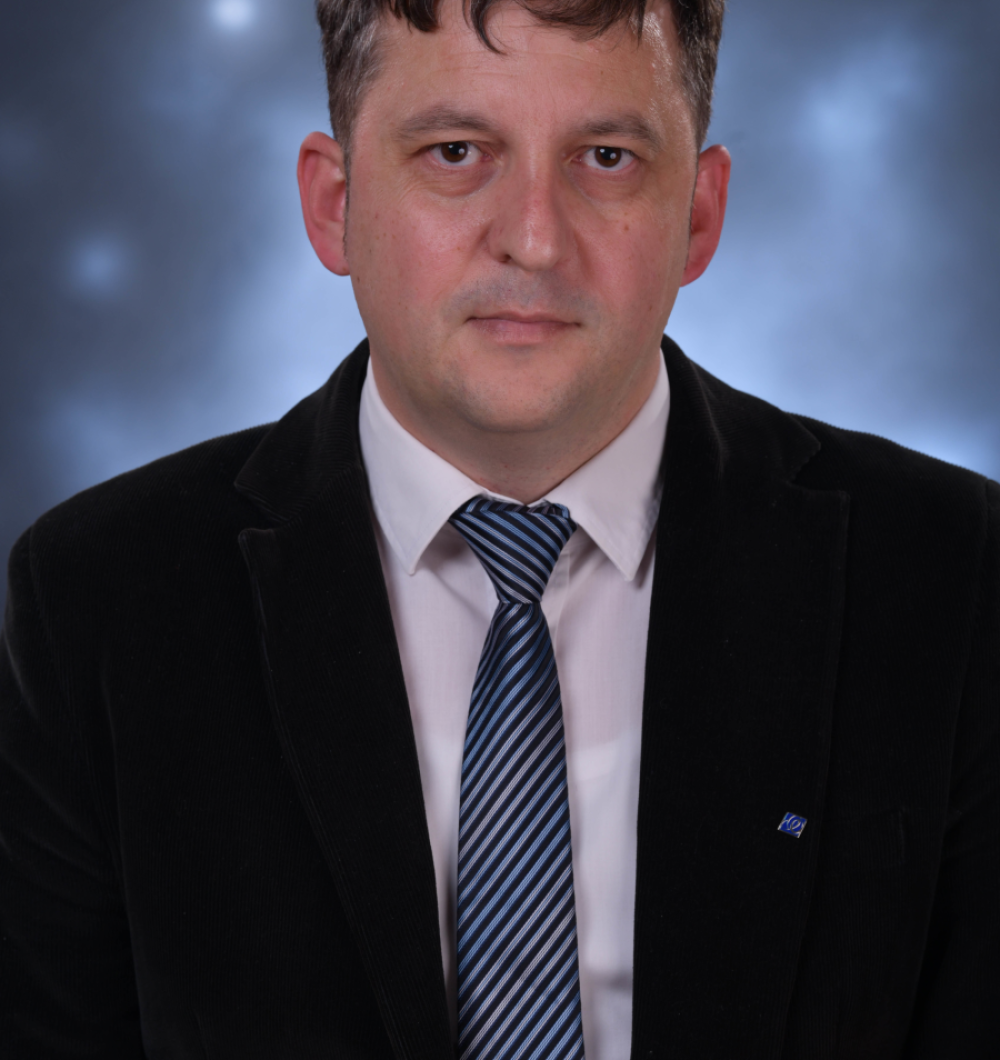
Prof. dr. Živko Kokolanski
Advancing Renewable Energy in the Adriatic Ionian Region through the Use of Digital Twins
Abstract
As the global energy landscape undergoes a radical transition toward decarbonization and decentralization, traditional management frameworks are proving insufficient for the complexities of modern grids. This Session explores the transformative role of Digital Twin (DT) technology—a virtual representation of physical assets, processes, and systems—as a primary catalyst for innovation in the energy sector. The Session is organized by the GOTOTWIN project that focuses on “Advancing Renewable Energy in the Adriatic Ionian Region through the Use of Digital Twins”. By bridging the gap between the physical and digital worlds, Digital Twins provide a necessary foundation for autonomous energy systems, ultimately driving the efficiency and sustainability required to meet future global energy demands. Researchers from the GOTOTWIN project will showcase how by integrating real-time data streams, IoT sensors, data-driven and physics-based modeling approaches, Digital Twins enable a shift from reactive maintenance to predictive and prescriptive intelligence. First, the FEIT Living Lab from North Macedonia will be presented along with the activities of the GOTOTWIN project. FEIT Living Lab hosts the GOTOTWIN transnational platform capable of integrating renewable (PV, wind and hydropower) sources and running energy services. The presentation focuses on the technical architecture required for successful DT deployment, highlighting the convergence of Artificial Intelligence, edge computing, and physics-based simulations. Next, the UOWM SMART Living Lab from University of Western Macedonia will be presented within the same context. The presentation includes an overview of the SMART LL infrastructure, highlighting the range of physical assets involved, including photovoltaic systems, battery storage, smart meters, buildings, and electric vehicles. It further focuses on the capabilities enabled by SMART LL, demonstrating how real-world data are utilized for the development and validation of advanced applications such as Digital Twin models, demand-side management strategies, and flexibility services. Finally, the role of SMART LL as an open innovation environment is discussed, emphasizing how companies and project partners leverage its infrastructure to test technologies, access real-world data, and co-develop solutions under realistic conditions. Energy platform living lab (EPLL) from Zagreb will also be presented describing its technical specifications as well as its task within the GOTOTWIN project. Its photovoltaic system was used for calibration of PV power plant model that was made by UNIZGFER and UBL (University of Banja Luka). Brief presentation of that model will be made. Finally, young researches from the Institute Mihajlo Pupin will share experience from the GOTOTWIN project, as well as from the recently funded Horizon Europe projects STUNNED SisTemic mUltilevel optimized orchestratioN of energy maNagement systEms for resiDential, industrial and tertiary energy flexibility services and ECHO Efficient Compact Modular Thermal Energy Storage System. The discussion within this Session will refer to a variety of novel concepts and technologies, serving at both energy generation and consumption side, such as energy efficiency, demand management, Smart Grid, micro-grids, renewable energy sources (RES), and other emerging solutions.
Keywords: digital twins, renewable energy, platform, innovation, call for experimentation, living labs, Artificial Intelligence
Biography of the presenter
Prof. Dr. Zivko Kokolanski is a Full Professor at the Faculty of Electrical Engineering and Information Technologies in Skopje, where he also serves as Vice-Dean for Finance and Industry Cooperation. With over 20 years of academic and industry experience, he is dedicated to bridging scientific research, applied innovation, and strategic partnerships to drive sustainable development. A recognized authority in electrical measurements, virtual instrumentation, and telemetry, Prof. Kokolanski has authored more than 100 scientific publications and holds international patent applications in programmable instrumentation. He has played a leading role in numerous international research and innovation projects, fostering collaboration and excellence across institutions. As Project Manager of the GOTOTWIN project under the INTERREG ADRION program, he drives the use of Digital Twin technology for Renewable Energy Sources to support regional growth and stakeholder engagement. In addition, through his work with INNOFEIT’s European Digital Innovation Hub, he actively promotes digital transformation and innovation-driven cooperation between academia and industry.